Blogs > Minor Matters
Run by The Trentonian's Nick Peruffo, this blog will provide daily multimedia coverage of the Trenton Thunder.
Wednesday, August 3, 2011
Thursday, July 7, 2011
Scout's notes on some Triple-A arms
Labels: Adam Warren, Andrew Brackman, Brandon Laird, D.J. Mitchell, Jesus Montero, Scout's Notes
Tuesday, March 29, 2011
Good Morning from a very, very wet Tampa
According to the local weather station, Tampa exceeded its predicted 1.8 inches of rainfall and instead got 3 inches of rain yesterday. In 15 years of living in Oregon, I don't think I've ever seen anything like what happened outside my window over the last 12 hours or so.
Anyway, on to the baseball stuff and what I (hopefully) have on tap for today. The Yankees play their last spring training game this afternoon, and there's still one big decision to be made. Steve Garrison, a product of the Hun School and a Ewing native, is battling Luis Ayala to be the second left-hander in Joe Girardi's bullpen.
Given that the team leaves for the Bronx this evening, that decision should be made today. I'm going to be over there to try to get Garrison's reaction one way or the other.
Across the street, the Double-A and Triple-A work groups are scheduled to play the Phllies' minor leaguers this afternoon. Mariano Rivera and Curtis Granderson are slated to get in some work in those games, so that should be pretty fun to watch.
Also, today should mark the first appearance from Austin Romine in minor league camp, given that he was officially named the Thunder's catcher yesterday. Jesus Montero should also be at the Himes Avenue complex, only this time as an official minor leaguer. He was there yesterday, but he hadn't been cut at that point.
I expect to see Manny Banuelos tomorrow.
If you've missed any of my coverage from the last two days, you can catch up over at The Trentonian's Thunder page, which will be updated throughout the season as well. You can as also find me on Twitter under the name @jnorris427.
Labels: Austin Romine, Curtis Granderson, Jesus Montero, Mariano Rivera, Steve Garrison, Trenton Thunder
Monday, March 28, 2011
Videos of Yadil Mujica, Eduardo Sosa, Jesus Montero, Gary Sanchez, Brett Marshall and Robinson Cano
Labels: Brett Marshall, Eduardo Sosa, Gary Sanchez, Jesus Montero, Robinson Cano, Trenton Thunder, Trentonian in Tampa, Yadil Mujica
Austin Romine will be back in Trenton
With Trenton last year, Romine hit .268/.324/.402 with 31 doubles, 10 homers and 69 RBIs. It was his first season with the full starter's role behind the plate. He and Montero had previously split time in Tampa and Charleston.
Labels: Austin Romine, Gustavo Molina, Jesus Montero, Trenton Thunder
Wednesday, February 23, 2011
Yankees littered throughout BP and BA's Top 100 lists
No. 3 - Jesus Montero - C ... Top Tool: Power - 70-grade
No. 30 - Gary Sanchez - C ... Top Tool: Power - 70-grade
No. 41 - Manny Banuelos - SP ... Top Tool: Command - 60-grade
No. 43 - Dellin Betances - SP ... Top Tool: Fastball - 70-grade
No. 78 - Andrew Brackman - SP ... Top Tool: Curveball - 70-grade
No. 98 - Austin Romine - C ... Top Tool: Arm - 60-grade
The other minor league must-read, Baseball Prospectus, released its Top 101 prospects in the back of its annual book. Kevin Goldstein put four Yankees on his list, and they are:
No. 3 - Jesus Montero - C
Key quote: "Montero presumably has everything it takes to be a middle-of-the-order force on a championship-level team."
No. 27 - Manny Banuelos - SP
Key quote: "His stuff and polish makes it easy for scouts not to hold his lack of size against him, and he should reach Yankee Stadium before he's legal to drink ... "
No. 29 - Gary Sanchez - C
Key quote: "Despite being just 17 years old, Sanchez looked like a man among boys in his Gulf Coast League debut, already bringing his plus-plus power into game situations."
No. 32 - Dellin Betances - SP
Key quote: "When he returned from Tommy John Surgery in 2010, everything about his game took a big step in the right direction; he maintained his mid-90s fastball while showing much-improved command and control to go with a curveball that was nearly unhittable when it was on."
Labels: Andrew Brackman, Austin Romine, Dellin Betances, Gary Sanchez, Jesus Montero, Manny Banuelos
Friday, February 11, 2011
Yankees announce six signings, spring training invitees
It also announces the Non-Roster Invitees, which are: Manny Banuelos, Dan Brewer, Jose Gil, Kyle Higashioka, Austin Krum, D.J. Mitchell, Jesus Montero, Jordan Parraz, David Phelps, Austin Romine, Bradley Suttle, Jorge Vazquez, Adam Warren and Eric Wordekemper.
Spring Training Invites-Additional
Labels: D.J. Mitchell, Jesus Montero, Manny Banuelos, New York Yankees
Saturday, January 29, 2011
Brian Cashman: Jesus Montero is "better, defensively, than some catchers in the big leagues right now"
Last season, at the upper levels of Scranton and Trenton, the mid-levels at Tampa and Charleston, and the lower levels at Staten Island and the Gulf Coast and Dominican Summer Leagues, the Yankees’ farm system flourished in a fashion nearly unmatched in team history.Position players and pitchers alike moved rapidly, giving the team a wealth of young, talented prospects to use to replenish the big club, be it via promotion or trade.
The advance represented the culmination of a four-season wholesale overhaul of the farm and the way it was constructed.
At the forefront of that metamorphosis was general manager Brian Cashman, who spoke exclusively with The Trentonian on Friday about what went into that process, how it is continuing, as well as other subjects pertaining to player development.
From Diamondbacks’ general manager Kevin Towers’ role with the team last year, to which farmhands he thinks fans should watch for this season, to why Jesus Montero is going to be the Yankees’ next stalwart behind the plate, this interview is a guide to how the organization approaches player development, and what effect it will have in shaping the team for 2011 and beyond.
JN: Last year was obviously a pretty good year for the Yankees on the farm. Since you’ve been GM, was 2010 the best year as far as player development is concerned?
BC: It’s hard to say. I wouldn’t be able to say that. Prior to the 2006 season, we have certainly recommitted ourselves to amateur scouting and player development. Since that time you’ve seen us slowly but surely emerge from one of the weakest to one of the strongest farm systems in the game.
JN: How do you begin the process of re-tooling the farm system, in order to make that transition?
BC: Make sure you have quality scouts. When a quality scout comes available, increase your scouting budget with new hires. We’ve hired more quality amateur scouts and we’ve hired more quality pro scouts.
We have been very aggressive in the draft and re-dedicated ourselves to tools, not necessarily to performance coming out of the amateur ranks. We had been very disciplined, in most cases, in holding onto our draft pick, our number one pick, and not losing it as free agent compensation.
JN: You mentioned giving up that draft pick, which is something you had to do this year when you signed Soriano. With the value of major-league talent on the rise, has the value of the first-round choice risen commensurately?
BC: I’m not going to answer that directly. The pick in the first round does have a great deal of value to you. As long as you’ve got a quality scouting director in the department, which we have, you’re going to get a quality player that’s going to impact your club. The signing bonus of that player, and the cost of developing him into something will certainly offset having to go to the free-agent market three years later to get that type of player somewhere else outside the market.
For instance, David Robertson has been a very terrific reliever for us. He cost us $200,000 to sign, to get him away after his junior year at Alabama. So, you see what it takes to sign free agents off the market after six years of work, and Robertson cost us a $200,000 signing bonus and the money – the minimum he’s made – and the development cost behind getting him here. There’s obviously value there, clearly.
JN: Because the Yankees have money, it obviously gives them flexibility in the draft, but does it also buy them more patience with guys who may take longer to develop, because of injuries or otherwise?
BC: No, I don’t think so. The bottom line is: Take the best player on the board. Brackman, in his case, the only reason he got to us is because of the knowledge that he had a ligament issue and was going to need Tommy John surgery. Nowadays, I think it’s an 88 to 92 percent success rate, so when you compare it to losing a year waiting for him, versus the other players, we chose Brackman. I don’t necessarily think patience has anything to do with it, other than you need patience to wait on these guys.
JN: Talking about Brackman, he was one of three guys, along with Jesus Montero and Dellin Betances, who the organization brought up toward the end of the year for a bit of a taste of the show. What did you hope those guys would gain during that brief stay?
BC: That’s another thing. When I got full authority, we implemented another added step in the development program. That was picking a few guys, maybe a handful of guys, on a yearly basis that you’d bring to New York on a homestand.
They wouldn’t be, obviously, activated on our roster, but they could participate in pregame, they could sit in on the advance scouting meetings, they can get a chance to meet the traveling secretary, know our facility, meet the trainers, sit in the stands and chart the pitches, get the atmosphere down. It’s just closing the gap on the unknown in their steps toward (being) future major leaguers.
JN: Was Brackman technically active during that time because he was on the 40-man?
BC: Brackman was active.
JN: Then I assume the reason he didn’t see any time was because the division versus wild-card scenario came right down to the wire.
BC: That, and there was also some down time between us bringing him up, so he wasn’t throwing and we didn’t think it was best to throw him when he was so rusty.
JN: You had Kevin Towers in your system last year, and now he’s obviously the general manager of the Diamondbacks. What was the value of having him in the system for the year?
BC: Kevin and I are dear friends, but I only (got) Kevin involved because I knew he was going to be a GM someday somewhere else, but I wanted to get an outside perspective of our system. He’s a tremendous evaluator of talent, so Damon Oppenheimer used him for the draft.
He went out there and saw the amateurs that were out there. He went through our farm system, and he was a guy I could lean on and ask for advice on a lot of different things. It was nice to have him for the short time we had him.
JN: So he could, for example, take a look at a guy you see as a starter and say that maybe he would profile better as a reliever?
BC: Not necessarily like that as much as him going through our system and ranking who he likes and comparing him to how we see it. It’s just an outside, objective – even though he was (working) for us last year – he wasn’t a part of the drafting or developing of these players (currently in the system). When you see players for the first time, as opposed to guys you’ve been seeing for a number of years in their development, you get a chance to get emotionally attached to guys. Kevin was just an objective viewpoint, kind of outside the organization, looking at our system and letting us know what he was seeing.
JN: With Russell Martin coming on board, is that an indicator that Montero will probably start the year back at Scranton?
BC: It’s an indicator of who’s going to be the starting catcher. It’s going to be Russell Martin, period. Then after that, the back-up situation’s going to be open for discussion between Cervelli, Montero, Romine, we’ll see. Or all of them. … They all could split time and get a little education in the process.
JN: With Montero, obviously the questions are with his defense. I know the Yankees believe he can catch right now. How far does the organization believe he has to go before its certain he can catch long-term.
BC: We believe he can catch, and we believe he can catch long-term.
JN: What are you and the organization seeing, then, that perhaps other organizations are missing when it comes to Montero’s defensive abilities?
BC: He’s come a long way. The defensive side is something he’s had to work on a long time. I’d liken it separately to a guy like Wade Boggs, who came through the farm system of the Red Sox, always hit, but people said he can’t play defense. He ultimately turned himself into a perennial Gold Glove-winning third baseman.
Hard work can close the gap on deficiencies. Derek Jeter made 56 errors in the South Atlantic League. … The minor leagues is (where you) work out your problems, and he’s certainly closing the gap. He’s not there yet, but he’s pretty damn close. We believe he’s better than some starting catchers, defensively, in the big leagues right now.
JN: Besides Montero and some of the other big names in the system, who do you and the organization expect to take that final step forward in 2011?
BC: I think those two kids in Trenton, Betances and Banuelos, that are going to be anchoring the rotation in Trenton. I think those two are going to be interesting to watch, people I’d be excited to go see if I was a fan.
Labels: Austin Romine, Brian Cashman, Jesus Montero, New York Yankees, Trenton Thunder
Friday, January 14, 2011
Contest Time!
THE CONTEST: Baseball America has already given us their Top 10 Yankees prospects. For those who need a refresher, those 10 were:
1. Jesus Montero
2. Gary Sanchez
3. Dellin Betances
4. Manny Banuelos
5. Andrew Brackman
6. Austin Romine
7. Hector Noesi
8. Eduardo Nunez
9. Slade Heathcott
10. Brandon Laird
Here's what I want you, my readers, to do: I want you to give me, in order, your guess for how BA will rank the Yankees' 11th-30th best prospects. It's as simple as that. In case there are multiple winners, here are two tiebreaker questions I'd like you to answer:
1. Off of whom did Jesus Montero hit his first Thunder home run?
2. Against whom did Jesus Montero record his first Thunder strikeout?
HOW TO ENTER: Below are the steps you need to take to partake in the fun and games. They're very simple.
1. On Twitter, follow @trentonsports, the account for The Trentonian's sport department
2. In the comments of this blog post, give me your guess for next 20 prospects on Baseball America's list, as well as your answers to the tiebreaker questions.
Entries will be accepted until next Friday, January 21. At that point, I will announce the winner and mail him or her the prize, which is detailed below.
FABULOUS PRIZES: The winner will receive Thunder bobbleheads of the following Thunder players - Brett Gardner, Francisco Cervelli, Mark Melancon and ... Jesus Montero, as well as a Bowman Chrome rookie card of Corban Joseph.
Labels: Bobbleheads, Jesus Montero, Trenton Thunder
Wednesday, November 10, 2010
Would you rather ... Jesus Montero for Clayton Kershaw
The final vote was 19-6 in favor of doing the deal, and here are all of the 25 votes, as transcribed from the Twitter.
The Responses: Yes votes
Crowny3: Of course.

Mwash1983: Absolutely do it, Kershaw pitched better on the road than at home this seasonPhilHughesFan: That's a no-brainer. Of course the Dodgers wouldn't do it.
TylerWilkinson: Yes.
Dpatrickg: I vote yes, if Montero's the only of the Yankees top 6 or 7 prospects going to L.A.
JoePawl: Make that six (yes votes).
HammerF: Make it six (although he was actually seven).
LeoKitty: Yes plz re: Kershaw trade.
JayDestro: All hangs on control (contract-wise), but leaning toward yes.
PPinstripes: I agree with Joe, especially because Kershaw is established and ridiculously young himself.
Rebexarama: Thought about it, I think I'd do it. Neither is 100,000% proven, obviously, but at least Kershaw's been in the majors.
dp57: Yes.
mikeaxisa: Kershaw and I wouldn't think twice about it.
Yankees_N_More: ABSOLUTELY YES! But only if I couldn't find a way to go get King Felix.
TheYankeeU: Absolutely. And I doubt you'll find a bigger Montero booster than me.
Heelsonthefield: I'll throw my vote in. Quality pitching trumps anything and everything. Yes to trade. Very dependent on terms of deal though.
GreggFerrara: Count me in as trade Jesus for the young lefty K machine.
OSingh91: I am a huge prospect hugger, but I'd easily take Kershaw. Love starting lefties that miss a lot of bats.
Joe_DelGrippo: Tough choice as I love Montero, but Kershaw is too good to pass on. Picked him at beginning of year as my Cy Young dark horse.
TheBronxView: I wouldn't, just because I want to see the Yankees develop a big power bat. Trade would make sense for the Yanks, though.
Stevensmithy: I really like Montero, and I don't care a TON for Kershaw. He can look very pedestrian at times in a weak-hitting division.
AndyinSunnyDB: Make that three for Montero. To steal a poker term, I'm going all in with him. Legends live forever.
Yankees666: No. Laura Posada said that Jorge will dh, so it's Montero time in the Bronx.
Cephster: Going to say no as well. Would only trade Montero for a sure thing, and Kershaw ain't it.
TheSteamer: No.
Labels: Clayton Kershaw, Jesus Montero, New York Yankees, Trades, Twitter
Monday, November 1, 2010
My Top 10 Yankees prospects
For Jesus Montero, briefly a Thunder catcher and our choice for the Yankees’ top prospect entering the Hot Stove season, the defense is merely a footnote.
It’s his bat that generates the ink — and justifiably so.
Montero recovered from an ice-cold start to dominate the International League at a tender 20 years old.
After May was completed, he looked lost, compiling just three home runs and 21 RBIs. By the time the season finished those totals were at 21 and 75, meaning he’d swatted an incredible 18
bombs and drove home 54 runs in a span of just 79 games.
The finish was so hot, in fact, that some were clamoring for Montero to earn a September call-up. A late infection quashed those talks, but the youngster will almost surely play a role in the Yankees’ catching picture in 2011.
2. Manny Banuelos - LHP
Continuing the trend of youth flourishing at the upper levels, there’s Manny Banuelos, a Mexican southpaw who, at just 19 years old, more than held his own at Double-A over the final few weeks of the season.
Scheduled as High-A Tampa’s Opening Day starter, Banuelos underwent an emergency appendectomy and missed more than two months before debuting in mid-June.
No matter, Banuelos bullied his way north from Florida to join the Thunder in the midst of a hotly contested pennant chase with the Fisher Cats.
The lefty wound up pitching his finest game during the finale of Trenton’s three-game sweep in the Eastern League Division Series, dispatching New Hampshire in dominating fashion.
Expect him to make a return to trip to central New Jersey next April.
3. Andrew Brackman - RHP
After seeming incapable of throwing a strike in 2009, things finally came together for Brackman last season.
After some early struggles, Brackman found his way in Tampa and earned a promotion to Trenton shortly thereafter.
Slowly but surely, control and confidence returned for Brackman, who admittedly was still not at 100 percent after having Tommy John surgery shortly after being drafted in 2007.
By the end of the season, the 6-foot-10 Brackman was the Thunder’s most dominant pitcher. He earned the team’s only win in the EL Championship series, flashing as high as 98 miles per hour and showcasing a devastating spike curveball.
It seems a coin-flip as to whether Brackman returns to Double-A to start next year.
4. Dellin Betances - RHP
Like Banuelos, Betances began the year on the shelf, although his absence was expected.
The 6-foot-8, 240-pounder spent April and May recovering from ligament reenforcement surgery on his throwing elbow.
When he returned, so did his high-90s fastball and wipeout curveball, as well as a revamped change-up and a much-improved sense of command.
New weapons in tow, Betances tore up the Florida State League, allowing a scant 43 hits in 71 innings, while fanning 88 against just 19 walks.
He’ll more than likely return to Trenton in 2011, but could move quickly.
5. Gary Sanchez - C
Another young, slugging catcher from Latin America?
Yep.
Just 17 years old, Sanchez, whom the Yankees signed out of the Dominican Republic for $3 million, was a man above boys in the Gulf Coast League. He slugged six bombs in 31 games before earning the promotion to Short Season Staten Island.
He struggled a bit there, but the dirt on Sanchez remains the same: He’ll hit, and hit a ton.
6. Slade Heathcott - OF
New York’s first-rounder in 2009, Heathcott spent the year in Low-A Charleston, and put up fine numbers for a 19-year-old getting his feet wet in pro ball.
The numbers tell one story, but here’s another: During one game of his I saw this year, Heathcott collected two hits against the Lakewood BlueClaws.
On the surface, that’s nice, but not exceptional. When you consider he did it while missing a contact lens, it shows some pretty nice determination from the young man.
7. Austin Romine - C
Handling the duties for Trenton all season, Romine didn’t quite flourish, but he didn’t flounder, either.
He hit .268 with 31 doubles, 10 home runs and 69 RBIs. The defense, while drawing some very positive reviews from scouts, didn’t look great on the stat sheet.
Still, his six passed balls marked a career low, and he expertly guided a talented and fluid staff all year long.
His work behind the dish does have flaws — he doesn’t handle velocity as well as he should, and he sometimes rushes himself — but he’ll e 22 next season, so there’s no reason to think he can’t overcome his problems.
8. J.R. Murphy - C
Another in a line of young, talented backstops, Murphy more than held his own in his full-season debut with Charleston — including a two-HR, nine-RBI game in mid-August.
He split time with Kyle Higashioka, and is athletic enough to perhaps move to the outfield down the line.
His .255/.327/.703 line doesn’t jump out at you, but seven bombs and 51 RBIs as a 19-year-old isn’t bad.
Still, he’s extremely polished, and could handle the staff next year at High-A.
9. Hector Noesi - RHP
He tossed the Thunder’s first nine-inning complete game since 2008, and apart from a mid-season struggle with his stride, Noesi was the team’s workhorse until he was moved up to Scranton for the season’s final weeks.
His solid four-pitch mix is enhanced by impeccable control.
He’ll start 2011 in Triple-A, more than likely.
10. David Phelps - RHP
Lost in the hubbub surround Brackman, Banuelos and Betances was Phelps, who quietly carried Trenton’s staff through the first part of the season.
He sports a a low-to-mid-90s fastball that he throws with excellent command and confidence anywhere in the zone.
Phelps was up and down after he was promoted to Scranton, but with a good showing in the early season, he could push for a spot in the 2011 bullpen.
Labels: Andrew Brackman, Austin Romine, David Phelps, Dellin Betances, Gary Sanchez, Hector Noesi, J.R. Murphy, Jesus Montero, Manny Banuelos, Prospects, Slade Heathcott
Thursday, August 5, 2010
A conversation with Julio Mosquera
JN: Is there any concern within the organization about Austin's low percentage of runners caught stealing this year?
Mosquera: Not really. We're just working on consistency in his throws. His stuff is just going to get better and better as he goes. He's got to keep working on consistent and accurate throws.
JN: What specifically does he need to work on? Is it footwork, mechanics, arm strength?
Mosquera: You've got to give credit to the runners, too. I really don't get caught up in him not throwing out that many runners. He's working on his exchange and his footwork and everything a catcher has to do to throw a ball to second base. It's just a process. It's just development -- that's why we have the minor leagues.
JN: You've been here a lot this year. What's the biggest improvement you've seen him make since opening day?
Mosquera: He just needs to play, bottom line. He's getting better in every area, and he's young still. He's 21 years old, he's coming up in the organization pretty fast, he's moving along pretty good. He just needs to play and get more experience.
JN: Do you think there's any pressure on him in his first year as the everyday catcher, without splitting time with Jesus Montero?
Mosquera: No, not really. That's actually the best thing that could happen to him. He's got nothing to worry about; he's just got to go out there and play every day. It's not a pressure thing. You can ask him, too, and he'll tell you the same thing. He actually likes it because he gets to start day in and day out.
JN: Does having a guy like Rene Rivera, who's spent time in the majors, as a backup help Romine's development at all?
Mosquera: It's good thing to have somebody who, when you're not playing, you can watch what the other guy's doing. Rene's going to do a pretty good job behind the plate every time he's back there, so it's good for the days you don't play to see that, instead of just going and getting somebody else who really doesn't do a good job. When you have to watch that, you'd rather be in the game. Anytime he gets a day off and Rene catches, the pitchers are taken care of, so that's good.
JN: What kind of strides has Romine made in his ability to call a game?
Mosquera: He's made a lot of strides. Like I said, he just needs to play. He's going to learn. You learn how to call the game by playing the game. So the more he plays, the more he's in the game, the more he's going to learn how to call the games. That just comes with experience. The guys who call the good games in the big leagues, they weren't born with that stuff. They learned how to do it as they came. The game gives experience, and you learn from that.
JN: When you're learning how to call a game, what's the first major hurdle you have to overcome in order to succeed?
Mosquera: First and most important is (learning) the pitcher. You've got to know what you've got on the mound. You've got to know who's pitching and what his strength is and you've got to know his capabilities. That dictates everything. You don't really have to go by what the hitter does. You've just got to worry about what they guy on the mound can do, and execute.
JN: How do yout gauge a guy's mental aptitude when it comes to knowing whether he'll be able to adapt and learn a staff's strengths and weaknesses?
Mosquera: You can see it. Guys that make adjustments, guys that can read what the pitcher can do. You just don't get caught up in, this is the situation, I've just got to go by this way. You've got to learn and make adjustments as you go, on the fly. Guys who can make adjustments right away, those are the guys who have some future in the game.
JN: Going away from Trenton, what kind of improvements has Jesus Montero shown in his ability to stay behind the plate for the forseeable future?
Mosquera: I believe he can (stick at catcher). Jesus is making big strides behind the plate. He wants to learn, and he's working a lot on his throwing. It's the same thing as Romine, he just needs to keep playing and they're going to learn and get better day in and day out every day. The best thing is they want to learn. That's a great thing.
Labels: Austin Romine, Jesus Montero, Julio Mosquera, Trenton Thunder
Monday, July 26, 2010
The Untouchables
With that in mind, the organization has a stable of prospects from which to deal. So, fair readers, who do you think the Yankees should keep at all costs, championship No. 28 be damned. Here, in no particular order, are some of the candidates:
1. Jesus Montero - C - 20 years old
This season: .274/.350/.812 23 2B, 10 HRs, 43 RBIs
Why the Yankees should keep him: The bat is the best in the system in a very long time, possibly since Derek Jeter, and maybe even better than that. He raked at every level before getting off to a slow start in Triple-A this season. Over his last ten games, however, the Venezuelan is hitting .469/.541/1.416 with three longballs and six RBIs.
2. Austin Romine - C - 21 years old
This season: .273/.347/.755, 6 HRs, 49 RBIs
Why the Yankees should keep him: The consensus is that Romine is a far better defensive catcher and a more all-around talent than Montero. Jorge Posada is getting no younger, and the next wave of catching talent (J.R. Murphy and Gary Sanchez) is a ways away. Additionally, the only true star catcher New York could have hoped to snap up in free agency, Joe Mauer, is off the market.
3. Manny Banuelos - LHP - 19 years old
This season: 0-1, 1.27 ERA, 1.08 WHIP, 39 strikeouts in 28 1/3 innings

Why the Yankees should keep him: The brass raves about Banuelos, talking about his poise as much as his pure stuff. He's one of the few left-handed pitching prospects in the system, and has displayed three plus pitches in High-A. Were it not for a preseason appendectomy, Banuelos would more than likely be in Trenton already.
4. Dellin Betances - RHP - 22 years old
This season: 5-1, 1.60 ERA, 0.84 WHIP, 52 strikeouts in 45 innings
Why the Yankees should keep him: He's coming off arm surgery, and is just beginning to scratch the surface of the potential New York saw when it took him in the eighth round four drafts ago. When healthy, he flashes a high-90s heater and a devastating breaking pitch. The velo, combined with his age, might make the Yankees want to dig in their claws for the long haul.
Labels: Austin Romine, Dellin Betances, Jesus Montero, Manny Banuelos, New York Yankees, Trade Deadline
Friday, July 9, 2010
Regardless of Lee's uniform, Yanks send signal that Montero is expendable
By agreeing to send Jesus Montero, the best bat in the system and perhaps the entirety of minor league baseball, to Seattle for Lee, they not so subtly inferred which man they believe will be the successor to Jorge Posada.
The pair has long been regarded as the twin peaks in a system rich with catching talent, but the ultimate question was about which would win out: Montero’s supremely gifted bat, or Romine’s all-around excellence.
Now, after about eight hours of deliberation, it appears we know the answer.
The deal, which would have sent Montero, Thunder second baseman David Adams and former Trenton ace Zach McAllister across the country, broke down because of questions Seattle had regarding Adams’ ankle.
That last part is surprising, given that Adams has been hurt for nearly two months. Yes, he did have a set back recently, but hasn’t had surgery. It’s a fully recoverable injury, and it’s not as if he would have started immediately with the Mariners.
The more likely scenario is that the Rangers simply offered Seattle a superior package of prospects, which includes slugger Justin Smoak, stud pitcher Blake Beavan, second baseman Matt Lawson and reliever Josh Lueke.
Beavan was with Triple-A, while Lueke and Lawson were a part of the Double-A Frisco RoughRiders.
The deal also tips the Yankees’ hand a little bit as far as the rest of the month leading up to the non-waiver trading deadline is concerned. By even making the proposal in the first place, it signals to the rest of the league that they believe their rotation, even with three All-Stars, is incomplete.
This belief may have been spurred by the up-and-down first halves from the rotation’s non All-Stars – Javier Vazquez and A.J. Burnett – or the upcoming innings count placed on Phil Hughes.
No matter the cause, it appears that the Yankees believe they need pitching, and Montero’s the man they’re willing to part with to acquire it.
Labels: Austin Romine, Cliff Lee, David Adams, Jesus Montero, Trenton Thunder, Zach McAllister
NY Post: Yankees on verge of landing Cliff Lee
With Triple-A this season, Montero's struggles are being made very public. Still he's turned it on quite a bit of late, and is sporting a .253/.329/.737 line with six homers and 35 RBIs. Still, he's just 21 and has loads of potential. Plus, with Austin Romine, J.R. Murphy, Gary Sanchez and Kyle Higashioka all still in the system, the Yankees have a major catching surplus.
David Adams, who has been on the disabled list since May with a sprained ankle, is also rumored to be part of the deal. As far as the Thunder's season goes, the Yankees could easily (and deservingly) promote Corban Joseph to Trenton.
Labels: Cliff Lee, David Adams, Jesus Montero, Seattle Mariners, Trenton Thunder
Thursday, April 15, 2010
Random Pics from Spring Training and Regular Season
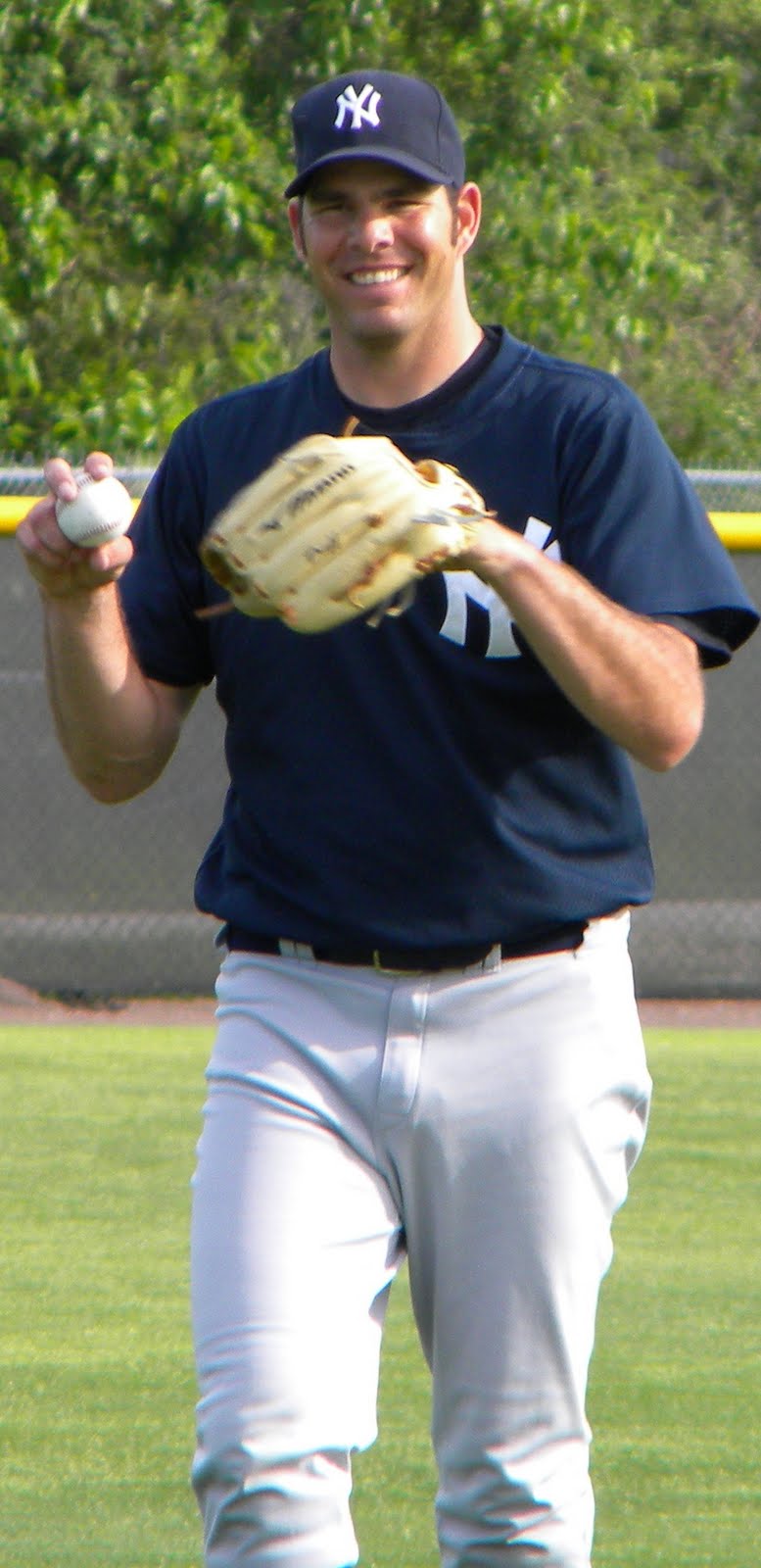
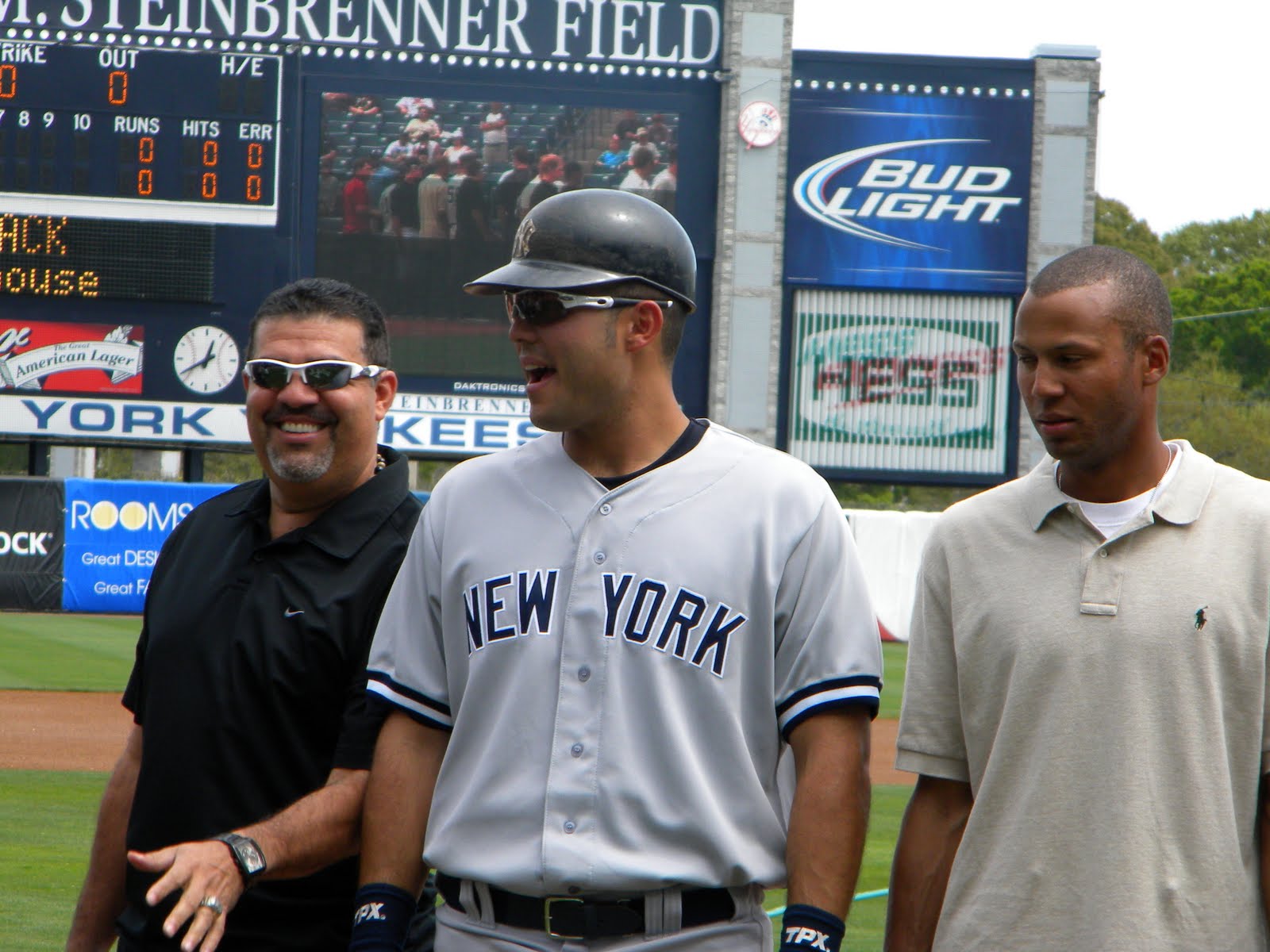
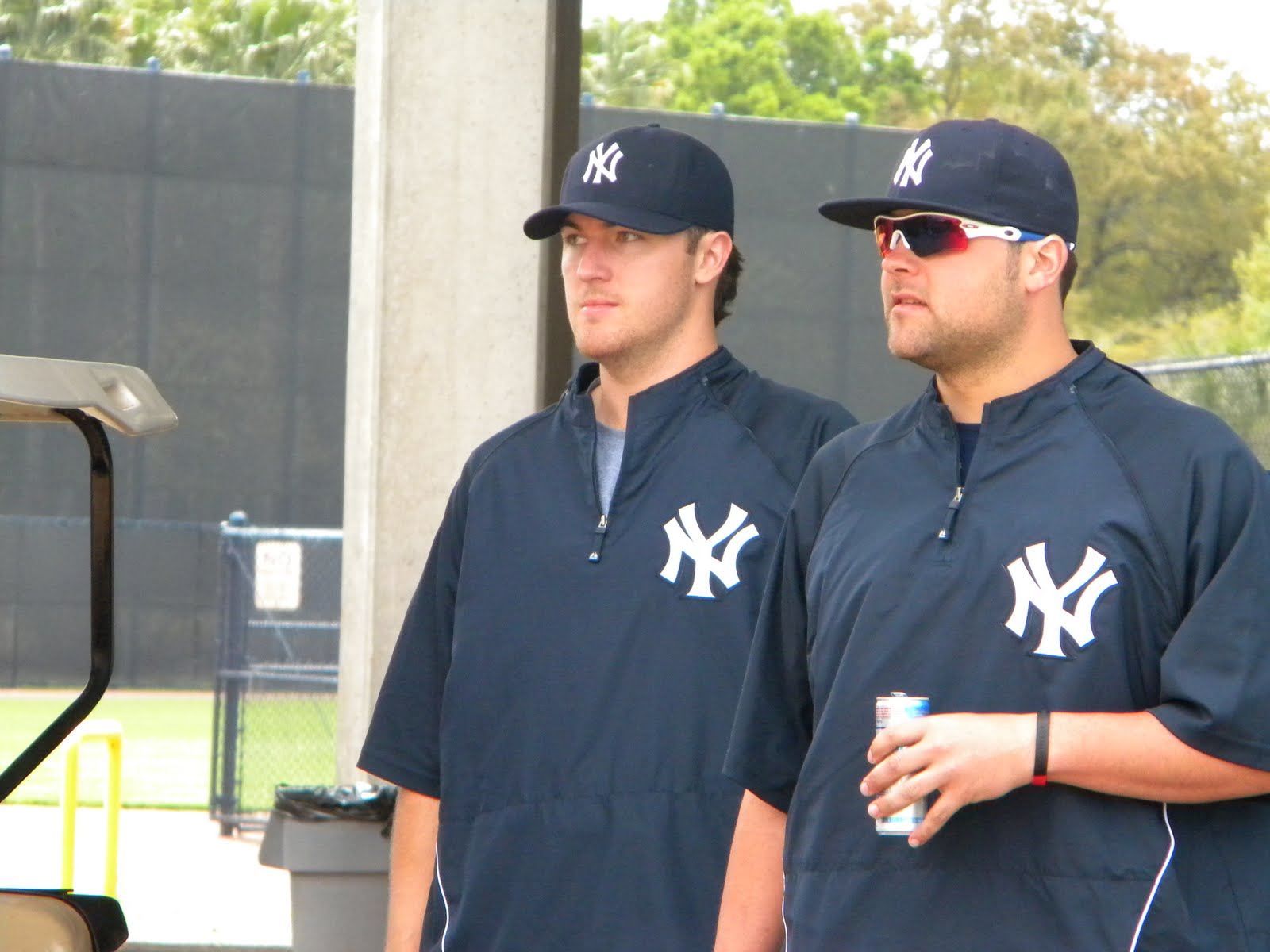
Pictures are as follows: Top Row - Jeremy Bleich, David Phelps. Second Row - Tommy Phelps and Cory Arbiso; Jesus Montero and Eduardo Nunez. Third Row - Ryan Pope, Grant Duff.
Labels: Cory Arbiso, David Phelps, Eduardo Nunez, Grant Duff, Jeremy Bleich, Jesus Montero, Ryan Pope, Tommy Phelps, Trenton Thunder
Saturday, April 3, 2010
Pictures of guys you may be familar with
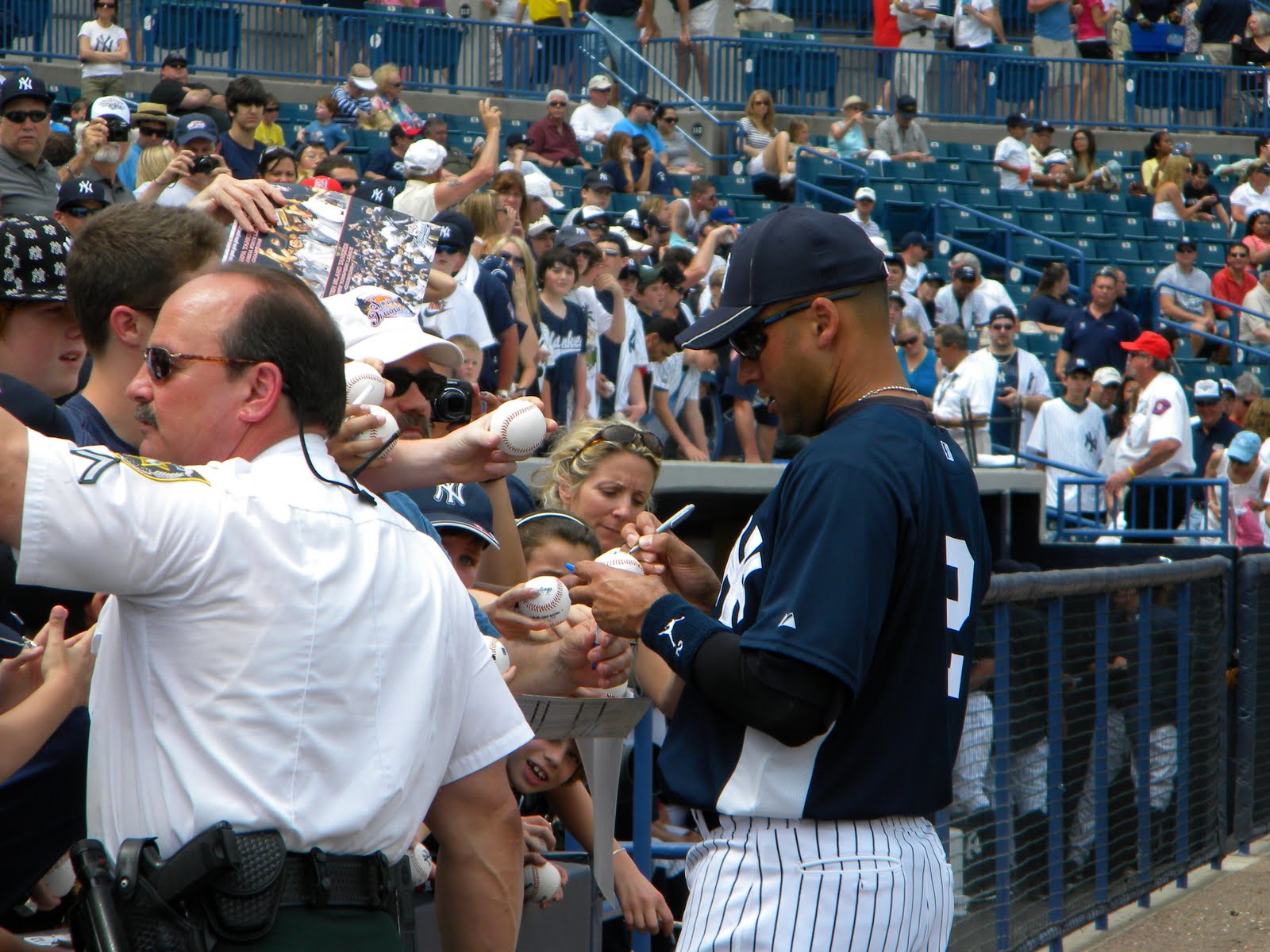
Clockwise from top right are: Joba Chamberlain and Phil Hughes; Luis Sojo, Jesus Montero and D.J. Mitchell; Derek Jeter; Frank Menechino and Tino Martinez, Jeter again, and Montero again
Labels: D.J. Mitchell, Derek Jeter, Frank Menechino, Javier Vazquez, Jesus Montero, Luis Sojo, New York Yankees, Tino Martinez, Trenton Thunder
Saturday, March 14, 2009
What a day in Bradenton!
Some of the details:
- Austin Jackson hit a two-run home run, his first of the spring, off Denny Bautista.
- Uber-catching prospect Jesus Montero also notched his first spring home run -- a grand slam, no less, off Chris Bootcheck.
- Former Thunder shortstop Ramiro Pena had no hits but still managed to drive in two runs.
- Both Jackson and Pena stole a base.
It wasn't all rosy for the Yanks' prospects, though. Mark Melancon, the reliever whom most predict will succeed Mariano Rivera at closer, had possibly the worst outing of his career.
His line: 2/3 innings pitched, 6 hits, 5 earned runs, 1 walk, 1 strikeout and 2 home runs. Not pretty, but I guess even Melancon is due for a bad day now and again. To put it in perspective, Melancon allowed just 24 earned runs in 95 innings pitched last season.
All in all, a pretty nice seven innings for some of the boys in Bradenton.
UPDATE: Our long national nightmare is over, folks. Kevin Russo has a spring training hit. He got a single late in the game, going from 0-for-17 to 1-for-18. Good for him.
Labels: Austin Jackson, Jesus Montero, Ramiro Pena
RSS